
What Does a Technical SEO Audit Cover?
What is included in a professional technical SEO audit, crawl, render, Core Web Vitals, schema, mobile-first checks, and a deliverable structure.
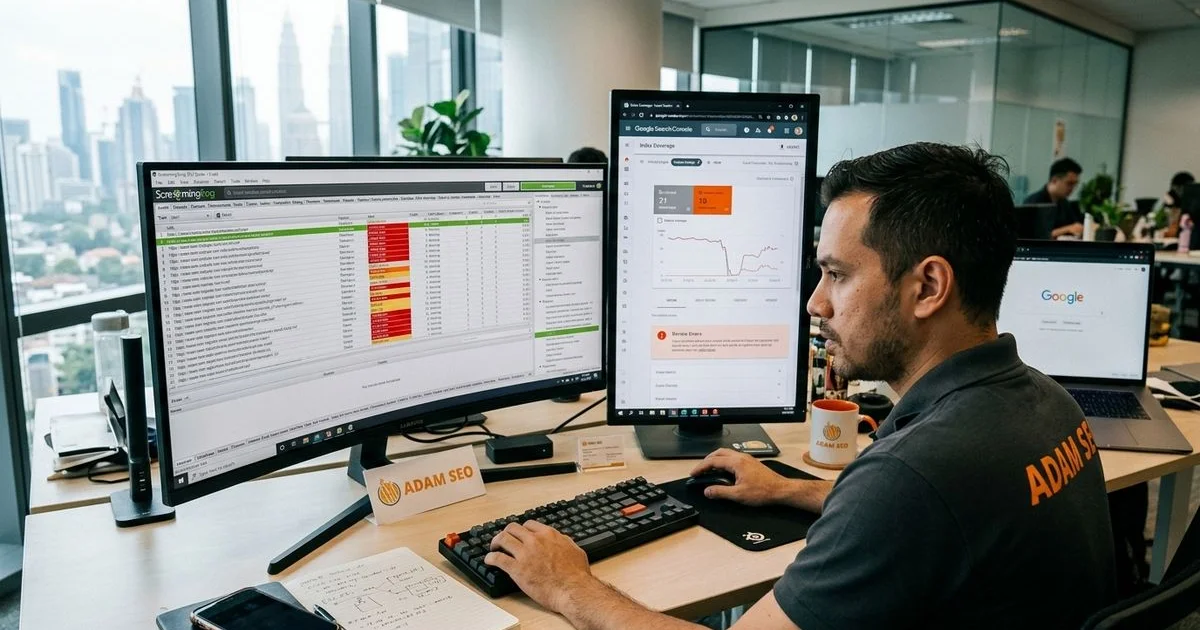
What a real technical SEO audit covers
Our agency, Adam SEO, was founded in 2011 by SEO veteran Adam Yong on the premise that search engine rankings are meaningless without tangible business results. This philosophy completely changes how we answer the question of what is technical seo audit value for our clients. Standard checklists are no longer enough.
We frequently see agencies run a generic Screaming Frog crawl, paste the output into a slide deck, and call it a finished deliverable. That approach is merely theatre, not an actual diagnosis.
Our process covers six distinct layers. Each layer produces a prioritised fix list with specific effort and impact estimates.
Let’s examine the exact scope you should expect from a proper technical diagnosis.
Layer 1: Crawl audit
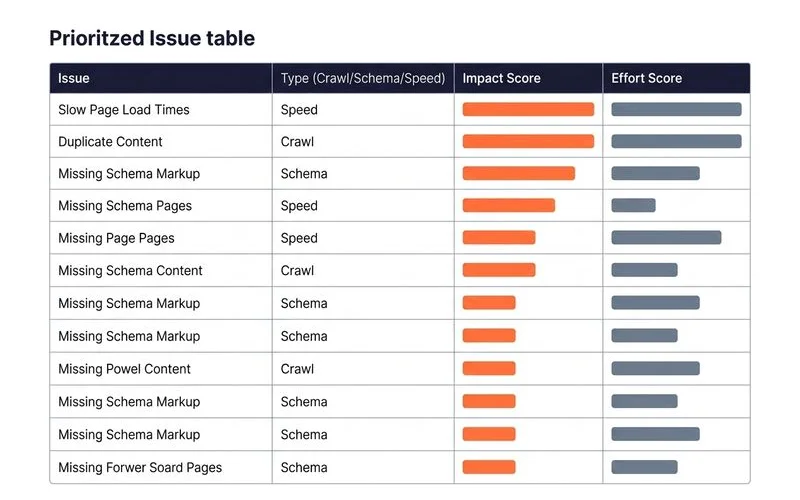
We start by assessing how search engine bots access your website. Crawlability is the absolute foundation of visibility, especially for Malaysian e-commerce stores managing thousands of product variations.
Our standard technical seo audit scope evaluates five critical access points:
- Robots.txt: We validate your specific rules to prevent accidental over-blocking. A simple syntax error here can instantly hide your entire product catalogue from Googlebot.
- XML sitemaps: The latest 2025 SE Ranking data reveals that over 17% of sitemaps contain redirecting URLs. Clean sitemaps ensure Google allocates its crawl resources efficiently.
- Indexation: The Google Search Console (GSC) Coverage report requires a thorough investigation. Identifying statuses like “Crawled - currently not indexed” often exposes underlying content quality issues.
- Redirect chains: Broken redirects and missed canonical tags leak valuable page authority. Consolidating these paths directly improves your core ranking signals.
- Crawl budget: Faceted navigation and calendar URLs can easily waste Google’s limited time. Parameter handling stops bots from getting stuck in endless sorting loops.
Layer 2: Rendering audit
Our team checks how a browser actually builds your pages behind the scenes. Many modern websites rely heavily on JavaScript frameworks like React or Vue for their frontend design.
This reliance introduces a massive risk for search visibility. JavaScript-heavy sites using only client-side rendering often face indexing delays of three to seven days. That delay means time-sensitive promotions might never rank when it actually matters.
Key rendering checks include:
- JS rendering: We compare the raw code Googlebot extracts against the visual DOM your users see. Hydration issues frequently hide critical text content from search engines.
- Server-side vs client-side rendering: Your site’s specific traffic patterns dictate the best rendering tradeoff. Server-side rendering generally provides much faster initial indexing.
- Prerender configuration: Single Page Applications (SPAs) require precise technical setups. Validating tools like Prerender.io ensures bots receive static HTML snapshots instantly.
- Lazy-loading impact: Images and below-the-fold text must remain completely discoverable. Improper lazy-loading implementations frequently block product images from appearing in Google Images.
Layer 3: Core Web Vitals
We prioritise Core Web Vitals because Google uses these exact metrics to evaluate user experience. Fast loading times are non-negotiable in Malaysia, where mobile internet penetration reached nearly 95% in 2024.
Interaction to Next Paint (INP) replaced First Input Delay as an official Google metric in March 2024. Recent 2026 data shows that 43% of websites still fail the 200-millisecond INP threshold. This failure directly impacts user engagement and your final conversion rates.
Our performance assessment includes both field and lab data:
- CrUX field data: We pull real-world metrics (LCP, CLS, INP) for your top 20 to 50 templates. This data reflects what actual customers experience.
- Lighthouse synthetic: This lab data serves as an isolated secondary check for debugging.
- PageSpeed Insights: We extract specific diagnostic guidance for your development team.
- Real-user monitoring: Integration provides continuous tracking if your team has it set up.
We never group page templates together during this analysis. Product detail pages, category hubs, and location pages all receive separate, individual assessments.
| Core Web Vital Metric | 2026 Passing Threshold | Business Impact |
|---|---|---|
| Largest Contentful Paint (LCP) | Under 2.5 seconds | Prevents high bounce rates on product pages. |
| Interaction to Next Paint (INP) | Under 200 milliseconds | Ensures immediate response when adding to cart. |
| Cumulative Layout Shift (CLS) | Score below 0.1 | Stops accidental clicks on shifting buttons. |
For resolving specific performance bottlenecks, see the detailed breakdown on Core Web Vitals issues hurting your rankings.
Layer 4: Schema validation
Our structured data audit ensures search engines can confidently categorise your business information. Properly implemented schema markup makes your local listings eligible for highly visible rich results.
Recent 2026 industry data indicates that pages enriched with structured data earn roughly 25% more clicks than standard text results. The right backend code translates directly into higher visibility on the results page.
The validation process covers several critical areas:
- Existing schema audit: We run every page-type template through Google’s Rich Results Test. This tool highlights syntax errors instantly.
- Gap analysis: We identify missing opportunities for essential categories like Product, Review, Organisation, or FAQ. Local businesses greatly benefit from specific regional schema.
- Schema coverage map: This document maps exactly which page types have existing code and which require new additions.
- Knowledge graph alignment: Checking Wikidata gaps and Wikipedia readiness prepares your brand for AI-driven search experiences.
Layer 5: Architecture and internal linking
We map your internal linking structure to ensure link equity flows efficiently throughout your domain. A logical architecture helps both users and search engine bots navigate your content easily.
Clear internal pathways prevent high-value pages from becoming completely isolated.
We evaluate your architecture using five specific criteria:
- Click-distance from homepage: High-revenue pages must sit within three clicks from the root domain.
- Internal linking depth: We calculate the average internal links per page and map the distribution across different sections. This metric highlights isolated product categories.
- Orphan pages: Crawlers often miss pages containing zero internal inbound links.
- Faceted-navigation indexation: Your canonical and noindex strategies must handle dynamic filters correctly to prevent duplicate content.
- Breadcrumb implementation: Proper breadcrumbs require accurate schema markup and mobile-friendly styling.
Layer 6: Mobile-first compliance
Our final technical layer addresses mobile performance and visual parity. Mobile devices currently drive over 64% of global website traffic.
A poor mobile experience actively damages your bottom line. Industry statistics from 2026 confirm that 53% of mobile users abandon a website if it takes more than three seconds to fully render.
We test your mobile implementation against strict compliance standards:
- Viewport configuration: Meta viewport tags must ensure a fully responsive design across all screen sizes.
- Tap-target spacing: Interactive elements like checkout buttons must sit far enough apart to prevent frustrating misclicks.
- Mobile-first content parity: The exact same content must be visible on both the mobile and desktop versions.
- PWA considerations: We review Progressive Web App configurations where applicable for your business model. These apps require specific manifest setups.
Deliverable structure
Our process transforms complex technical findings into a practical roadmap. The goal is rapid implementation, rather than just delivering a dense document that sits unread.
A comprehensive seo audit checklist produces three specific deliverables:
- Written report (30-60 pages): Each technical layer is thoroughly documented with screenshots, clear examples, and strategic prioritisation.
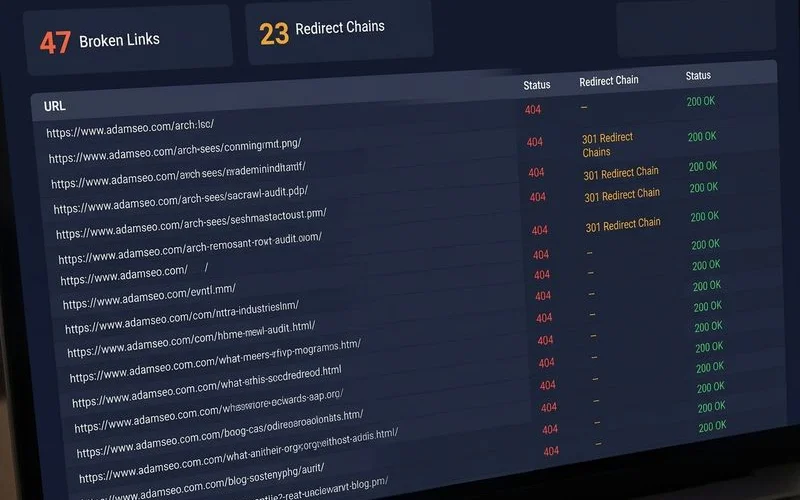
- Issue list (spreadsheet): Every single issue includes severity rankings, estimated traffic impact, developer effort required, and an assigned owner.
- Walkthrough call (60-90 minutes): We host a live Loom or Zoom session to review the findings directly with your internal development team. This direct communication removes ambiguity.
We charge separately for one-off audits, utilising custom pricing based entirely on the size of your website. Many businesses choose to convert to a retainer agreement once the initial fix list is implemented. You can explore these ongoing options through our Technical SEO services.
Proper sequencing is absolutely critical for project success. For advice on balancing backend fixes against content updates, read our guide on Technical SEO vs On-Page SEO.
FAQ
How long does an audit take?
Typically 2-3 weeks for SMB sites under 1,000 pages. 4-6 weeks for enterprise stores or large content sites with complex architecture, JS rendering, and migration history. Shorter audits exist but usually skip the depth that surfaces actual issues.
What format is the deliverable?
Written report (PDF, 30-60 pages) plus a Loom or Zoom walkthrough plus a prioritised issue list with effort and impact estimates. The issue list is the working document, the report provides context, the walkthrough explains why each issue matters.
Will the audit break my site?
No. Audits are read-only diagnostic work, no changes to your site, no risk of breakage. Implementation comes after the audit, separately, with proper staging and rollback plans.
Related guides
Core Web Vitals Issues Hurting Your Rankings
LCP, CLS, INP definitions, common causes per metric, theme/plugin culprits in WordPress, image optimisation, JS blocking, lab vs real-user data.
Technical SEO vs On-Page SEO: Where to Start
Technical foundation before on-page wins amplify. When on-page is enough, when technical issues block all progress, and an audit-first methodology.
Ready to talk about Technical SEO Services?
Our technical seo services retainers are senior-led and tied to revenue. Free discovery audit, no obligation.