
Is E-commerce SEO Right for My Store?
Self-audit for online store owners, when E-commerce SEO compounds, when paid is enough, MRR thresholds, and dropship vs branded considerations.

Every online retailer eventually asks the same hard question. Does my store need ecommerce seo to survive the next few years?
From what we see working with local merchants, search visibility is the clear dividing line between struggling shops and highly profitable brands. Founded in 2011 by SEO veteran Adam Yong, Adam SEO was built on the premise that search engine rankings alone are meaningless without tangible business results.
“The most dangerous scenario isn’t a high customer acquisition cost. It’s high costs combined with zero organic retention.”
Those results are harder to achieve today.
Customer acquisition costs in Malaysia climbed 23% in 2025 alone, meaning paid ads eat directly into your margins. We will look at the exact data driving this shift and break down five critical questions to qualify your store for organic investment.
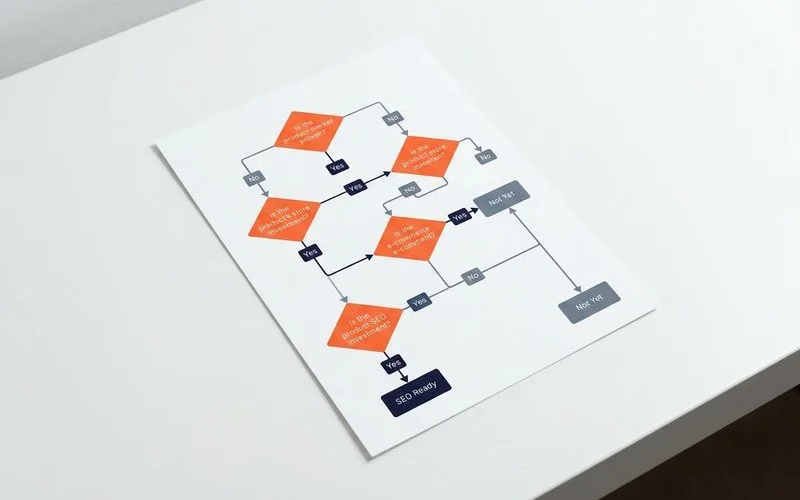
The 5-question store self-audit: Does my store need ecommerce seo?
E-commerce SEO is not an automatic requirement for every business. Use these five questions to qualify your site and see if the investment makes sense.
1. Are your products branded with original SKUs, or dropship/commodity?
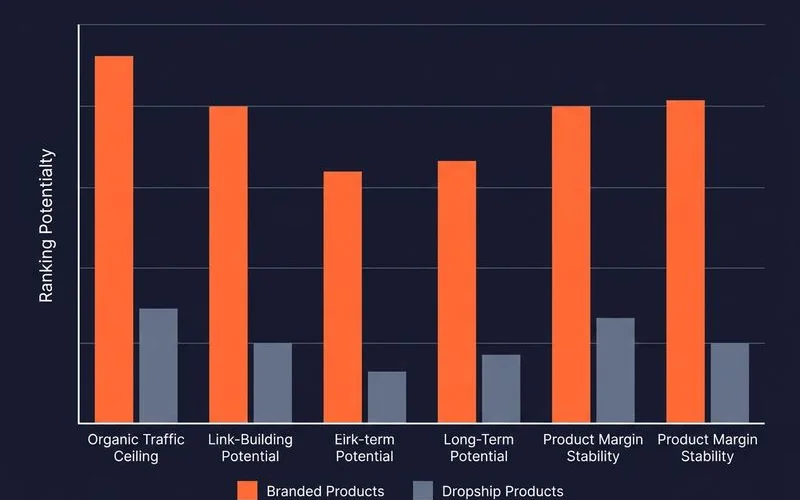
Branded original products hold a significant advantage for long-term organic growth. You control the specific product copy and can upload unique photography.
We know that building deep, genuine customer reviews is much easier when you own the brand. A 2025 survey by the Hong Kong Trade Development Council found that 47% of Malaysian online shoppers prioritise brand image and reputation above almost everything else.
Dropship and pure commodity products usually share the exact same supplier descriptions across thousands of competing stores.
- Exclusive Product Copy: Write descriptions that answer specific buyer questions.
- Unique Photography: Upload high-resolution images that competitors cannot access.
- Proprietary Specifications: Highlight unique features that shoppers actively search for.
- Review Depth: Collect user-generated content to prove authenticity.
This duplication caps your ranking potential severely. Unless you spend heavily on differentiation, search engines will struggle to choose your commodity page over an established marketplace like Shopee or Lazada.
2. What is your monthly revenue today?
Your current cash flow dictates your strategy. Below RM 10,000 in Monthly Recurring Revenue (MRR), you should focus strictly on foundational technical fixes and product schema.
Stores generating above RM 30,000 MRR have the resources to fund content velocity and link acquisition. We see these larger investments paying back in very reasonable timeframes.
Full premium search optimisation typically requires a dedicated monthly retainer. According to recent industry surveys of Malaysian agencies, these comprehensive retainers range from RM 2,000 to RM 10,000 per month.
| Store Revenue (MRR) | Recommended Search Strategy | Typical Monthly Investment |
|---|---|---|
| Under RM 10,000 | Technical fixes, product schema, basic on-page | Minimal (Internal Team) |
| RM 30,000 to RM 99,000 | Content velocity, targeted link acquisition | RM 2,000 to RM 4,500 |
| Over RM 100,000 | Full premium retainer, advanced digital PR | RM 4,500 to RM 10,000+ |
An investment at this level usually pays for itself within six to twelve months for stores exceeding RM 100,000 MRR.
3. How searchable is your category?
Search volume dictates your potential traffic ceiling. You must run a quick Ahrefs or Keywords Everywhere check to see if your top products have aggregate monthly volume above 5,000 in Malaysia.
Some product categories enjoy heavy commercial demand, such as “buy aircon Malaysia” or “kasut kanak-kanak.” Other niches rely almost entirely on social discovery, including highly specialised fashion, custom art, and local crafts.
- High Search Volume: Consumer electronics, home appliances, B2B software.
- Low Search Volume: Handmade jewellery, limited-edition streetwear, experimental art.
We often advise clients in low-volume niches to build community awareness first. For instance, the food and beverage sector is booming at a 16% annual growth rate primarily due to quick-commerce apps, not traditional Google searches.
4. How heavily do you rely on paid (Ads, Shopping)?
If paid ads generate 80 percent of your revenue, organic search is the strategic answer to reduce that expensive dependency. Customer acquisition costs for first-time buyers in Malaysia climbed roughly 23% in 2025 alone.
We clearly see Meta advertising rates and Google Shopping click costs reaching unsustainable levels for many independent retailers. A balanced split of 50/50 between paid and organic means search is amplifying what already works.
- High Paid Reliance: Use organic traffic to lower blended acquisition costs.
- Balanced Traffic: Scale both channels simultaneously for maximum reach.
- High Organic Reliance: Build protective moats around your top-ranking keywords.
You should invest in organic growth to defend your territory if your traffic is already 90 percent unpaid. The goal is to build a diversified traffic portfolio that protects your profit margins.
5. Can you sustain a 6-12 month investment before meaningful ROI?
E-commerce search optimisation is a compounding asset that requires patience. Your business must have the cash flow to wait six to twelve months for a meaningful return.
Month one through three involves foundational technical overhauls and specific product page work. You will likely see early ranking lifts between months four and six.
We find that the obvious financial impact and revenue spikes usually materialise between months eight and twelve. Should you lack that runway, focus your budget on Google Shopping and conversion rate optimisation first.
- Months 1-3: Technical fixes, schema markup, and product detail page optimisation.
- Months 4-6: Initial ranking improvements and impressions growth.
- Months 8-12: Significant traffic increases and clear revenue impact.
You can layer in an organic strategy later when your finances stabilise.
Stores that benefit most: Is ecommerce seo worth it?
Certain business models naturally align with search engine algorithms. Buyers also perform extensive research before purchasing certain high-value goods.
We notice that stores maintaining over 100 specific SKUs can easily capture meaningful long-tail search volume. Premium fashion, B2B supplies, and consumer electronics are perfect candidates for informational content.
- Exclusive Brands: High-margin original SKUs with zero duplicate content issues.
- Large Catalogues: Stores with 100+ items targeting specific, long-tail queries.
- Research-Heavy Niches: Electronics and premium fashion where buyers seek detailed guides.
- Ad-Fatigued Sellers: Businesses actively trying to lower their reliance on paid media.
E-commerce shops already paying for ads frequently use organic strategies to reduce their blended acquisition costs.
Stores that should focus elsewhere first
Organic search is not the immediate answer for every retail operation. Pure dropshipping stores selling highly common commodity products face massive uphill battles against established marketplaces.
Stores generating under RM 5,000 in monthly revenue need to prioritise immediate cash flow through paid ads or organic social media. Categories with negligible Malaysian search volume simply cannot sustain an expensive technical strategy.
- Commodity Dropshippers: Stores competing purely on price with identical supplier descriptions.
- Early-Stage Startups: Sites under RM 5,000 MRR requiring immediate cash injections.
- Social-First Niches: Highly visual products lacking established text-based search demand.
These heavily social-driven niches require influencer marketing and viral content rather than traditional keyword targeting. We always recommend building a steady sales baseline before attempting complex search campaigns.
Should I invest in store seo if my audience does not use Google? The data strongly suggests looking at other channels first.
If your store qualifies, our E-commerce SEO services cover the full stack from PDP optimisation to faceted-nav cleanup to migration safety. You must weigh these technical needs against your current cash flow and growth goals.
For platform-specific decisions, see Shopify SEO vs WooCommerce SEO. Does my store need ecommerce seo to beat rising ad costs?
The answer is usually yes for established brands. For the SEO-vs-paid trade-off, see E-commerce SEO vs Google Shopping.
FAQ
We are under RM 10K MRR, should we wait?
Foundational technical SEO and product schema yes, those compound regardless of MRR and cost relatively little to set up. Aggressive content velocity (4-6 blog posts per month, link acquisition) can wait until cash flow stabilises and ROI per content asset becomes clearer.
Does dropshipping work with SEO?
Hard. Duplicated supplier copy across thousands of dropshipping stores limits ranking ceilings without serious differentiation. If you dropship, your moat needs to be content depth, expert reviews, comparison guides, original photography, none of which most dropshippers invest in. Branded original products outperform dropship for SEO almost always.
Can a hybrid B2C plus B2B store use E-commerce SEO?
Yes. Most playbooks transfer cleanly. The differences: B2B often needs longer comparison content, lead-gen forms on category pages instead of cart-only flows, and trade-pricing logic that does not break SEO. We adapt the framework per store.
Related guides
Cost of E-commerce SEO Services in Malaysia (2026)
E-commerce SEO pricing for Malaysian stores by store size, platform-specific labour, content velocity, and migration costs. ROI benchmarks included.
What to Expect From Your First 6 Months of E-commerce SEO
Month-by-month milestones for your first 6 months of E-commerce SEO, audit, technical fixes, optimisation, content compounding, KPIs to track.
E-commerce SEO vs Google Shopping Ads
Honest comparison: E-commerce SEO vs Google Shopping Ads. CAC over time, when each dominates, ROAS expectations, and the hybrid stack approach.
Common Reasons Your Product Pages Don't Rank
Diagnose product-page ranking issues, thin descriptions, missing schema, slow speed, faceted-nav traps, duplicate manufacturer copy, missing reviews.
Ready to talk about E-commerce SEO Services?
Our e-commerce seo services retainers are senior-led and tied to revenue. Free discovery audit, no obligation.