
Why Aren't My Product Pages Ranking?
Diagnose product-page ranking issues, thin descriptions, missing schema, slow speed, faceted-nav traps, duplicate manufacturer copy, missing reviews.

Our team at Adam SEO has seen the frustration of product pages not ranking countless times since we started auditing sites in 2011.
You know exactly how it feels when a seemingly perfect item just sits there, invisible on Google. A Malaysian online store reaches out because their top products refuse to climb the search results.
We find the diagnosis usually traces to a specific set of product page seo issues rather than a single massive failure. The following sections break down the exact reasons why product pages dont rank. Let us look at the data, what it is actually telling us, and explore practical ways to respond.
The seven causes of product pages not ranking
We know identifying the root cause of product pages not ranking requires looking past surface-level metrics.
A proper diagnosis involves analyzing content, technical blockers, and platform-specific quirks. The breakdown below covers the most frequent culprits affecting regional markets.
1. Thin product descriptions
We constantly see local merchants carrying over bad habits from marketplace platforms, where uploading a single photo dump is the norm. The single most common issue is a severe lack of unique text.
A product page with 50 words of generic copy cannot compete effectively. We looked at a recent 2026 study by Digitaloft, which found that the average top-ranking e-commerce product and category page contains exactly 310 words of unique content.
This data proves that you do not need a massive essay to win. Aiming for a sweet spot of 200 to 500 words is ideal for your top-revenue SKUs.
We recommend focusing on specific use cases, detailed specifications, direct comparisons, and common customer questions. Relevance beats volume every time, meaning top pages prioritize helping shoppers choose over keyword stuffing. Your primary goal must be answering the buyer’s immediate questions clearly.
2. Missing Product, Review, or Offer schema
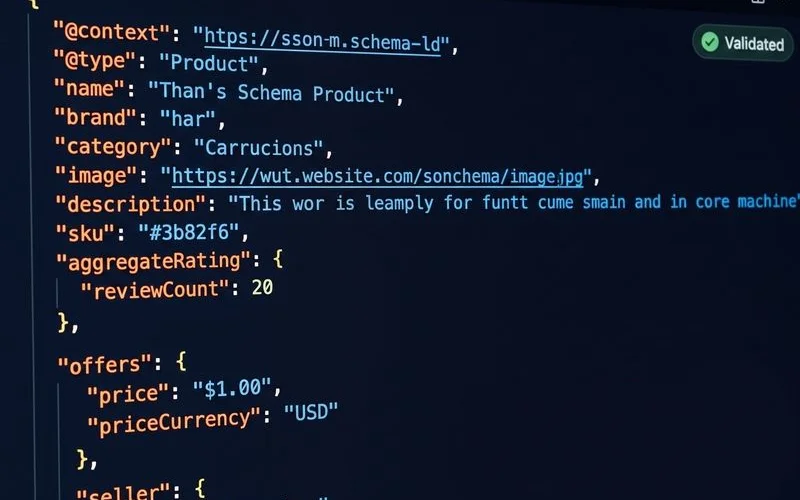
We always check for gaps in default platform setups, which frequently omit AggregateRating, Brand, or Identifiers like GTIN and MPN. Schema markup enables the rich search results that lift click-through rates substantially.
Missing these elements is a huge missed opportunity for visibility. We monitored how Google tightened its rich result eligibility with the March 2026 structured data update.
Product, Offer, and Review schemas remain fully supported and highly valuable for online stores. Preparation is also necessary for the new video link attribute that Google began validating in April 2026. We consider closing these technical gaps to be one of the highest-impact fixes available.
3. Slow page speed and Core Web Vitals fails
Product pages tend to be image-heavy, making them highly prone to Largest Contentful Paint (LCP) failures. An LCP on a high-traffic page over 3 seconds means you are actively losing rankings to faster competitors.
We see this frequently with local stores running heavy promotional banners on mobile. Recent 2026 hosting data shows that the average LCP for self-hosted e-commerce sites on shared Malaysian servers often reaches 3.8 seconds. That is well above Google’s recommended 2.5-second threshold.
We suggest prioritising image optimisation as your first step to improve performance. Start by serving product photos in next-gen formats like WebP or AVIF. Lazy-loading and correct sizing will quickly reduce that initial load time.
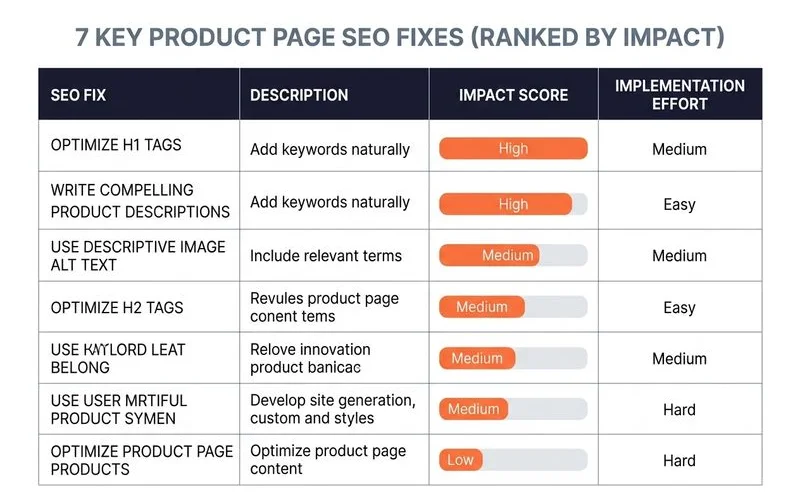
4. Faceted-navigation indexation traps
We often spot massive indexation traps on platforms like Magento or custom PHP builds. Unrestricted filter combinations create severe duplicate content issues.
If Google indexes thousands of category variants based on price range, colour, and size, it dilutes the authority of every individual page. We strongly advise canonicalising these noisy combinations to direct search engines to the primary version of the page.
You must noindex the long-tail combinations and carefully select only high-value filter parameters for indexation. An in-depth guide is available outlining What Is E-commerce SEO for a deeper explanation of faceted navigation.
5. Duplicate manufacturer copy
We frequently see ranking issues when businesses dropship inventory and use generic supplier PDF copy. Relying on exact manufacturer text forces you into direct competition with yourself.
If your product description matches the paragraph used by 200 other Malaysian stores, search engines have no reason to prioritize your page. We recommend rewriting copy for your top-revenue SKUs to instantly separate your store from the crowd.
Original text provides a unique ranking signal. Adding real photography, localized use-case examples, and specific details makes the page far more helpful.
6. Missing or weak internal linking
We find that burying products deep within a site architecture practically guarantees poor search performance. If your product pages require more than four clicks to reach from the homepage, search engine bots may not crawl them frequently enough.
Establishing clear internal link pathways is vital for signaling page importance. We advise setting up category pages to link directly to your best-selling items.
Those top items should then cross-link to related accessories. Structuring breadcrumb navigation ensures users and crawlers can easily trace their path back to core category hubs.
7. No review content on the page
We consider customer feedback to be a primary driver of natural, long-tail keyword coverage. Operating without user-generated reviews makes ranking significantly harder than it needs to be.
Actual text reviews are mandatory to populate the Review and AggregateRating schema that generate star ratings in search results. We noted in recent 2025 e-commerce data that general cart abandonment in Malaysia spiked to 68%.
This cart abandonment rate is largely driven by heightened consumer caution regarding online transactions. Visible, authentic reviews provide the social proof required to overcome that hesitation and build trust.
The fix order
We prioritise these corrections based on how quickly they can impact visibility and user trust.
Systematically resolving these issues yields the best return on your time. Splitting the workload into technical adjustments and content updates keeps the process manageable.
| Implementation Phase | Focus Area | Expected Impact |
|---|---|---|
| Phase 1: Technical | Schema & Core Web Vitals | Immediate SERP display improvements |
| Phase 1: Structure | Faceted Nav & Internal Links | Better crawl efficiency |
| Phase 2: Content | Product Descriptions | Increased keyword relevance |
| Phase 2: Trust | Reviews & FAQs | Higher conversion rates |
Phase 1: Immediate Technical Fixes
We handle these foundational tasks before touching any visible text to solidify the backend elements. Fixing the technical baseline allows search algorithms to read the site properly. Tackle the following configuration updates first.
- Validate Product, Review, Offer schema with Google’s Rich Results Test to fix gaps immediately.
- Run Core Web Vitals on your top 20 pages in CrUX to identify and fix LCP and CLS issues.
- Audit and clean faceted-nav indexation by canonicalising noisy filter combinations.
- Build logical internal linking pathways from category pages to top products and establish product-to-product connections.
Phase 2: Content and Trust Signals
We find that fresh content drives both indexation and conversion rates once the technical foundation is secure. Focus next on enriching the actual user experience. Execute these on-page improvements to build authority.
- Rewrite your top 50 product descriptions to ensure unique copy, hitting a minimum of 200 to 500 words.
- Set up a review collection system using post-purchase emails to secure 5 to 10 reviews per top SKU.
- Add structured FAQs to pages to gain long-tail keyword coverage and improve overall page depth.
We compiled a detailed Shopify SEO vs WooCommerce SEO breakdown to help you handle implementation differences. Platform specifics matter when correcting product pages not ranking.
Your specific content management system will dictate exactly how you execute the technical phases. We can map out a specific action plan to get your traffic moving again if you need direct assistance.
If you would rather have experts handle the heavy lifting, our E-commerce SEO services start with a free discovery covering exactly these issues. Schedule a review today to uncover the exact barriers holding your sales back.
FAQ
Should I rewrite manufacturer descriptions?
Yes for top-revenue SKUs first. Focus on the 20 percent of products that drive 80 percent of revenue. Add unique copy (use cases, ideal buyer profile, comparisons), original photography, and let UGC reviews build the rest of the long-tail content. Do not rewrite all 5,000 SKUs at once, that is wasted effort.
Does adding reviews really help SEO?
Yes, in two ways. Review schema enables star ratings in SERPs which lifts CTR 20-40 percent. Review content adds long-tail keyword coverage you would not write yourself, real customer language about specific use cases. Both compound over time.
How fast does Google reindex changes to a product page?
Top-traffic pages reindex within 1-7 days. Long-tail pages can take 2-8 weeks. You can request manual indexing via Google Search Console for individual URLs after major changes, but for 100+ updates rely on the natural recrawl cycle.
Related guides
Is E-commerce SEO Right for My Online Store?
Self-audit for online store owners, when E-commerce SEO compounds, when paid is enough, MRR thresholds, and dropship vs branded considerations.
Cost of E-commerce SEO Services in Malaysia (2026)
E-commerce SEO pricing for Malaysian stores by store size, platform-specific labour, content velocity, and migration costs. ROI benchmarks included.
What to Expect From Your First 6 Months of E-commerce SEO
Month-by-month milestones for your first 6 months of E-commerce SEO, audit, technical fixes, optimisation, content compounding, KPIs to track.
E-commerce SEO vs Google Shopping Ads
Honest comparison: E-commerce SEO vs Google Shopping Ads. CAC over time, when each dominates, ROAS expectations, and the hybrid stack approach.
Ready to talk about E-commerce SEO Services?
Our e-commerce seo services retainers are senior-led and tied to revenue. Free discovery audit, no obligation.