
Your First 6 Months of E-commerce SEO
Month-by-month milestones for your first 6 months of E-commerce SEO, audit, technical fixes, optimisation, content compounding, KPIs to track.

A realistic 6-month e-commerce SEO roadmap
We know that scaling an online store in Malaysia is intensely competitive right now. The national e-commerce sector is projected to hit RM 180 billion by the end of 2026. Many founders feel the pressure to compete with Shopee and Lazada ads, often hoping for overnight organic results to offset those advertising costs.
That expectation is completely disconnected from reality. Anyone selling 30-day e-commerce SEO results on commercial keywords is overpromising.
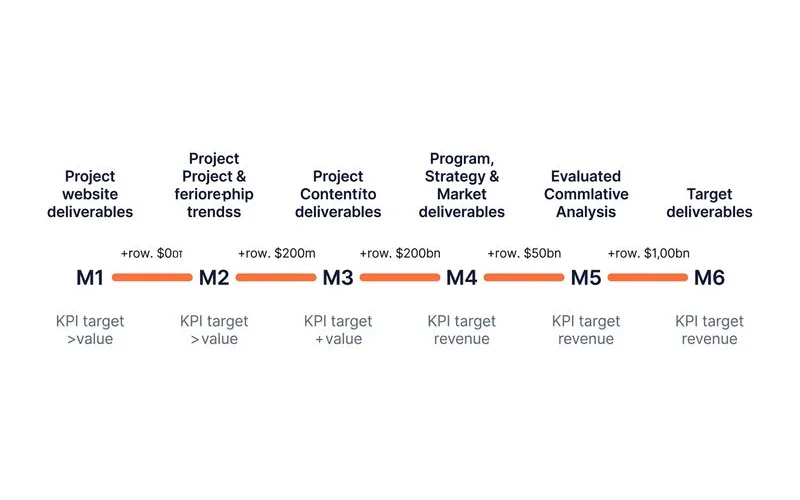
Our approach focuses on sustainable, compounding phases for your ecommerce seo first 6 months. Month one handles the direct technical foundation, while month six shows real revenue movement. Month 12 is when the trajectory we documented in our case study (283 percent revenue growth) starts taking shape.
Here is exactly what each month should produce to set clear ecommerce seo expectations and get your store on track.
Month 1: Foundation and audit
Month one delivers a complete diagnostic of your store’s technical health and keyword opportunities. You can expect a thorough inspection of indexing blocks and structural issues holding back your current traffic.
We use enterprise crawlers like Screaming Frog to identify exactly where Google struggles with your site. Over 75 percent of e-commerce transactions in Malaysia now occur on mobile devices, making mobile-first indexing our primary focus.
Our team audits your Core Web Vitals to see if your store meets the 2026 Interaction to Next Paint (INP) standards. Failing the strict 200-millisecond INP limit actively hurts your conversion rate.
Deliverables:
- Complete technical audit (crawl, indexation, faceted-nav, schema, Core Web Vitals)
- Keyword research and prioritisation against revenue impact
- Competitor analysis for top 5 competitors per priority category
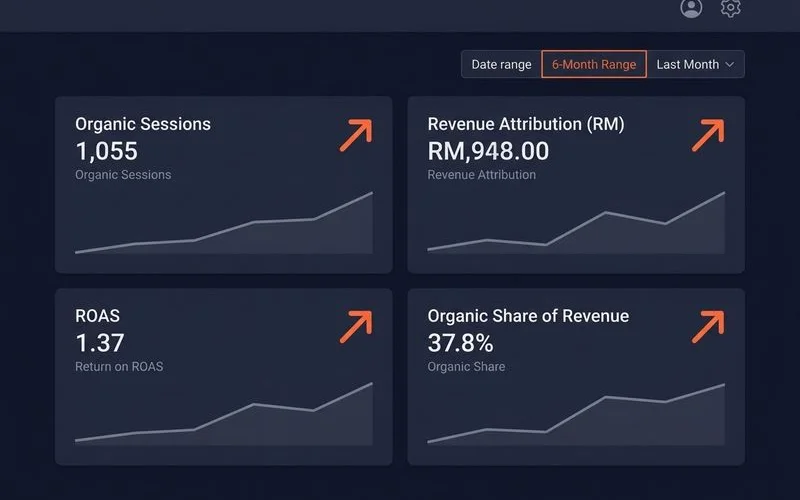
- Baseline metrics captured: organic sessions, revenue attribution, ROAS, ranking distribution
KPIs to track: baseline organic sessions, baseline organic-attributed revenue, current PDP ranking distribution, technical audit issue count.
Month 2: Technical foundations
Month two focuses entirely on shipping technical fixes to make your site faster and easier to index. The goal is to resolve every issue found during the audit phase.
We implement strict faceted-navigation rules to prevent duplicate content from destroying your crawl budget. Fixing Core Web Vitals is the highest priority here.
Recent 2026 data shows that a 100-millisecond delay in Largest Contentful Paint (LCP) can cause a 3.5 percent drop in conversion rates for Shopify stores. Fast loading speeds directly translate to more sales, so our developers ensure your site meets these strict thresholds.
Closing Schema gaps is another major task for this period. Adding Product and Review schema allows your listings to show star ratings and prices directly in Google search results, which naturally increases your click-through rate.
Deliverables:
- Faceted-nav indexation rules implemented (canonical, noindex, indexed-where-valuable)
- Schema gaps closed (Product, Review, Offer, AggregateRating, Brand, Identifiers)
- Core Web Vitals fixes shipped on top 20 PDPs
- Sitemap rebuild and GSC verification refresh
KPIs to track: indexation status (Crawled vs Indexed in GSC), schema validation passes, Core Web Vitals improvements in CrUX field data.
Month 3: PDP optimisation begins
Month three brings visible changes to your product detail pages (PDPs) and category architecture. You will see new, unique copy applied to your most valuable products.
We optimise your top 20 PDPs to compete directly with aggressive local marketplaces. Relying on default manufacturer descriptions is a massive mistake.
Stores that integrate unique Product Information Management (PIM) data rank much higher. Our content strategy also begins rolling out targeted buying guides to capture users earlier in their buying journey.
We also build a logical internal linking structure to pass authority from your homepage down to key products.
Deliverables:
- Top 20 product pages rewritten with unique copy (200-500 words each), schema fixes, image optimisation
- Top 10 category pages enriched with intro copy, internal linking, FAQ schema
- Internal linking architecture rolled out (homepage to top categories, category to top products)
- Content velocity begins: 2-4 long-tail buying guides or comparison content per month
KPIs to track: PDPs with traffic in GSC (count), category page average position, new content URLs published.
Month 4: Content compounding starts
Month four is when your new informational content begins generating long-tail traffic. You should start seeing your first organic-attributed revenue lift from these specific queries.
We prioritise these long-tail keywords because they convert exceptionally well. Recent 2026 data proves that long-tail keywords deliver a 2.5 times higher conversion rate than generic head terms.
A shopper searching for “buy waterproof hiking boots Kuala Lumpur” is ready to spend money. Our link acquisition campaigns also launch during this window to build digital PR signals.
Building localised digital PR links gives your Malaysian domain a strong trust signal. You will also see our review velocity programme taking effect.
User-generated content like reviews can increase product conversion rates by up to six times. This fresh review text also provides search engines with more context to index.
Deliverables:
- Long-tail buying guides start ranking on long-tail commercial queries
- Early link acquisition campaigns ship (2-4 backlinks per month from digital PR or partnerships)
- Review velocity programme on PDPs running (post-purchase email, on-page widget)
- First measurable organic-attributed revenue lift on long-tail SKUs
KPIs to track: organic sessions trend (should be lifting 10-20 percent month-on-month), long-tail keyword ranking count, review count per top SKU.
Month 5-6: Early revenue trajectory
Months five and six mark the turning point where organic traffic begins to pay for itself. By the end of your first 6 months store seo campaign, your target keywords will stabilise at the top of the search results.
We expect your organic-attributed revenue to fully cover your retainer cost during this phase. This assumes a Premium tier engagement on stores doing over RM 50,000 in monthly revenue.
The global average e-commerce conversion rate hovers around 2.95 percent. Our goal is to push your targeted traffic well above that baseline by securing rich results like price badges in the SERPs.
You will notice these visual elements draw clicks away from standard text results.
Deliverables:
- Long-tail rankings stabilise at top positions
- Head-term commercial keywords show visible movement (page-2 to page-1 climbs)
- Schema-driven rich results start appearing (star ratings in SERPs, price/availability badges)
- Organic-attributed revenue covers retainer cost or beats it (Premium tier on RM 50K+ monthly revenue stores)
KPIs to track: organic-attributed revenue vs retainer cost, ROAS, head-term rankings on top 10 priority keywords.
What “on track” looks like at month 6
Reaching the end of your ecommerce seo first 6 months provides a clear picture of your campaign’s health and future trajectory. You should have a predictable, measurable flow of qualified organic traffic.
We look for specific benchmarks to confirm your store is performing correctly. For a store generating RM 50,000 or more in monthly revenue running the Premium tier, the numbers should speak for themselves.
Here are the standard expectations:
- Organic sessions up 30-60 percent over baseline
- Organic-attributed revenue covers retainer cost (Premium tier 4,500/month covered by month 6 typical)
- 60-80 percent of priority long-tail keywords on page 1
- Page-2 to page-1 movement on 30-50 percent of priority head-terms
- Rich results visible in SERPs for top SKU categories
If your metrics fall materially below these benchmarks, we must re-run the audit immediately. Common causes include insufficient content depth, weak link profiles, or technical regressions from CMS platform updates.
For ongoing E-commerce SEO support, our services start with a free discovery audit to get you back on track. For broader timeline context across all service lines, the how long does SEO take guide covers the full national SEO trajectory. Reach out today to schedule your technical review.
FAQ
Will I see revenue impact in 6 months?
Long-tail organic revenue often appears at month 4-6 (specific product queries, branded variations, niche category pages). Competitive head-term revenue typically takes 9-12+ months. If your store had decent baseline rankings before the engagement, you will see lifts faster than a brand-new domain.
What if rankings stall in month 4?
We re-audit competitor content depth, link velocity, and schema gaps. Stalls usually trace to one of three causes: insufficient content depth on target categories, weak link profile, or a new competitor that escalated their game in your space. Each has a different fix.
Do I need to commit to 12 months upfront?
We work month-to-month after a 6-month minimum commitment. Below 6 months, there is not enough runway for the foundational technical and content work to compound into meaningful revenue lift.
Related guides
Is E-commerce SEO Right for My Online Store?
Self-audit for online store owners, when E-commerce SEO compounds, when paid is enough, MRR thresholds, and dropship vs branded considerations.
Cost of E-commerce SEO Services in Malaysia (2026)
E-commerce SEO pricing for Malaysian stores by store size, platform-specific labour, content velocity, and migration costs. ROI benchmarks included.
E-commerce SEO vs Google Shopping Ads
Honest comparison: E-commerce SEO vs Google Shopping Ads. CAC over time, when each dominates, ROAS expectations, and the hybrid stack approach.
Common Reasons Your Product Pages Don't Rank
Diagnose product-page ranking issues, thin descriptions, missing schema, slow speed, faceted-nav traps, duplicate manufacturer copy, missing reviews.
Ready to talk about E-commerce SEO Services?
Our e-commerce seo services retainers are senior-led and tied to revenue. Free discovery audit, no obligation.