
How to Optimize Content for AI Search
Actionable AEO content techniques, question-led structure, entity completeness, schema priorities, citation patterns, semantic clustering, FAQ schema.
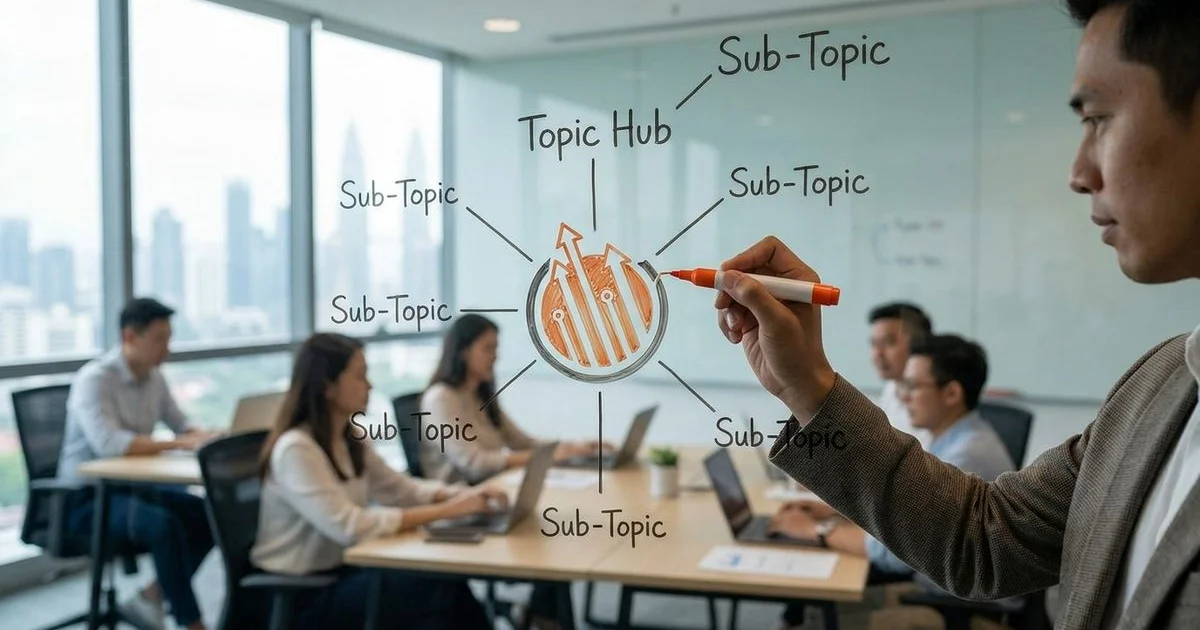
Five techniques to optimize content for ai search and move AEO performance
We all know the search landscape in Malaysia is shifting beneath our feet. Sixty percent of traditional searches now end without a single click to a website, according to recent 2026 data.
You must optimize content for ai search to capture this rapidly growing audience.
Our audits across hundreds of local SMEs and enterprise brands reveal a clear pattern. AI search traffic is up 527% year-over-year. The businesses winning this new traffic simply structure their knowledge for machine extraction.
We founded Adam SEO in 2011 under SEO veteran Adam Yong to focus on tangible business impact rather than vanity metrics. These five content techniques consistently move AI-search visibility and drive real revenue. The process demands strict discipline instead of short-term gimmicks.
1. Question-led page structure
Our team has found that a question-led structure is the single most important shift for AI visibility. Structuring your page with a question-based heading directly answers the exact conversational queries AI models process. Writing for chatgpt search means acknowledging that large language models act as synthesis engines rather than traditional indexes.
We see them extract direct answers far more reliably from pages where the H1 is a question and the first paragraph is the answer. This structural alignment is crucial for Malaysian e-commerce stores and SMEs targeting local search intent. A 2026 study by SE Ranking showed that AI Overviews appear in up to 25% of all searches.
Our data indicates the models specifically look for question-and-answer pairs to populate those overviews. The Before and After examples below illustrate this concept clearly. Notice how the second version provides immediate context.
Before:
- H1: “SEO Services Malaysia”
- Body: “Welcome to Adam SEO. We are a leading SEO agency…”
After:
- H1: “What does an SEO agency in Malaysia actually do?”
- Body: “An SEO agency in Malaysia ties keyword targeting to revenue using a structured framework. At Adam SEO, our 4-Stage approach combines technical audits, conversion rate optimisation, content velocity, and AEO/GEO methodology over a 6-12 month engagement. Specifically, we…”
We use this exact structure to signal to LLMs that a page contains a direct answer to a buyer question. This simple framing dramatically lifts the citation rate across AI platforms. Users type full questions into Perplexity and ChatGPT today.
Our clients win by providing the exact matching answer. This precise matching is the foundation of modern visibility. The next crucial step is placement.
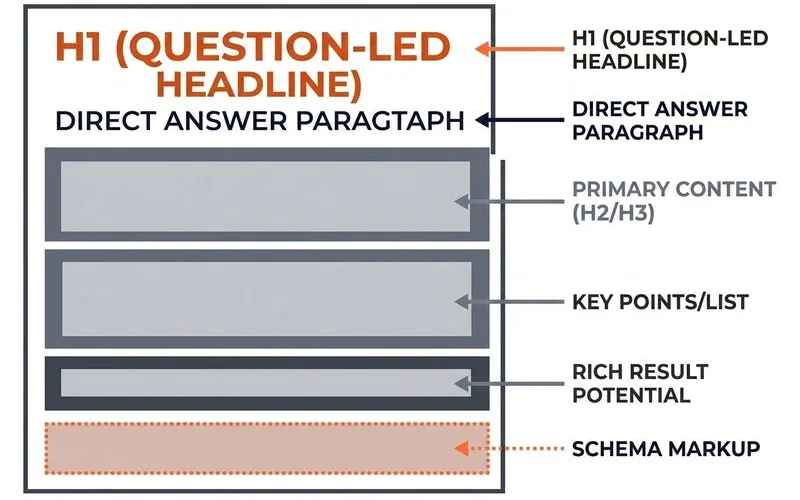
2. Direct answer in the first 60 words
Our content audits prove that placing a direct answer in the first 60 words is essential for AI citation. The first paragraph must contain a specific, unambiguous response to the page’s main question. LLMs scan the opening lines of a page to determine relevance.
We know that if your opening is marketing fluff, the model will skip you. The average text length of a Google AI Overview is just 254 words. AEO content writing demands highly concise, fact-dense snippets to build these summaries.
Our recommended pattern mirrors how journalists write inverted-pyramid news articles. The structure breaks down into three distinct phases. Follow this exact hierarchy for every new guide:
- The Hook: A direct answer in 40 to 60 words.
- The Proof: Provide 200 to 400 words of evidence, statistics, and detail.
- The Context: Use the remaining body text for supporting information.
We use this format to ensure the AI engine extracts exact facts instead of misinterpreting a long narrative. It prevents hallucination by the language model. It also provides human readers with immediate, tangible value.
3. Schema markup priorities for AI consumption
Our developers rely on schema markup to provide the machine-readable context that AI engines need. Schema acts as a structured digital roadmap for AI platforms. Five specific schema types do most of the heavy lifting for Answer Engine Optimisation.
- Organisation (homepage): with
knowsAbout(your topical expertise),hasCredential(certifications, recognition),sameAs(LinkedIn, Crunchbase, Wikipedia, social profiles). - FAQ (service pages, guide pages): structured Q&A with valid
QuestionandAnswertypes. - HowTo (process content): step-by-step process with structured
stepandtexttypes. - Article (blog posts and guides): with valid
author,datePublished,dateModified,image. - Product (e-commerce): with
Offer,Review,AggregateRating,Brand, identifiers.
We highly prioritize FAQ schema because of its massive impact on visibility. A 2026 SE Ranking study revealed that pages with FAQ markup achieve a 41% citation rate in AI answers. Pages without this structured data only see a 15% citation rate.
We always validate every schema implementation against Google’s Rich Results Test before shipping. Invalid code is strictly penalised by extraction models. Poorly structured JSON-LD data is actually worse than having no schema at all.
4. Entity completeness across the web
Our strategy for building entity completeness ensures AI systems recognize your brand as a trusted source. Entity completeness requires consistent attributes appearing across multiple authoritative platforms. LLMs treat your business as a known entity only when third-party data validates your claims.
We focus on securing these specific external signals for our clients. A strong presence requires multiple touchpoints. Essential verification sources include:
- Wikipedia article (where eligible) and Wikidata entry.
- Consistent brand description across LinkedIn company page, Crunchbase, and local Malaysian industry directories.
- Authoritative third-party citations (industry publications, podcasts, .edu, .gov references).
- Founder/team profiles consistent across LinkedIn, conference bios, press.
- Award and recognition mentions in authoritative third-party sources.
We see brands fail when 100 percent of their content lives on their own website. Zero authoritative third-party mentions mean AI models lack the signal to trust the entity. Perplexity AI heavily indexes external references and real-time platforms to verify facts.
We help clients earn these crucial third-party mentions through strategic digital PR and partnerships. Podcast appearances and conference speaking engagements also establish objective credibility. This off-site validation is the exact consensus mechanism AI platforms use to rank sources.
5. Semantic clustering and topical depth
Our semantic clustering approach proves that deep, interconnected content outranks isolated articles. Single-page coverage of a topic is no longer sufficient for competitive categories. AI models cite brands that demonstrate true topical depth.
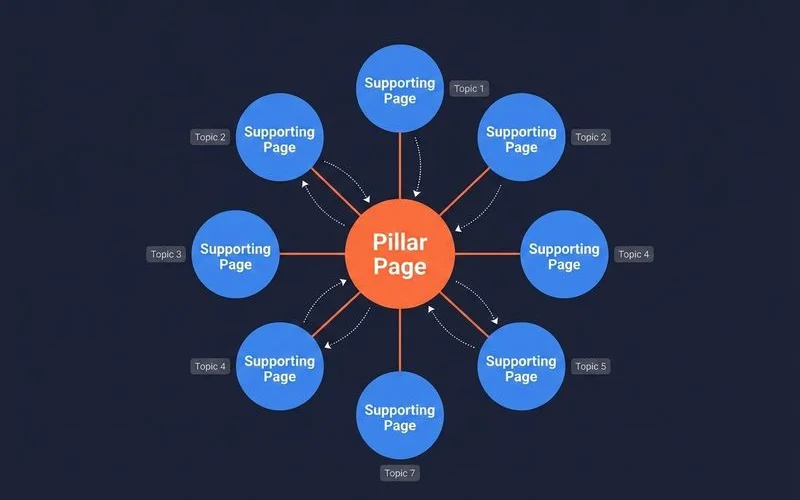
We build a pillar page on a core topic and surround it with supporting guides. This architecture creates a dense web of relevance that language models can easily crawl. A strong cluster typically includes:
- A primary hub page defining the core concept.
- 5 to 15 supporting pages covering specific angles.
- Dedicated frequently asked questions and decision-stage comparisons.
We use this exact LP-KB topical map approach across Adam SEO. The site you are reading right now features a primary Hub, which is the AEO/GEO services page. It connects directly to seven supporting pages on related topics.
We cover essentials like What is AEO/GEO and how to conduct an AI visibility audit. You can also find resources detailing common mistakes in this space. That topical density is exactly what compounds over time and signals authority to an AI search engine.
What to avoid
Our audits frequently uncover outdated tactics that actually harm an AI visibility strategy. Avoiding negative signals is just as important as building positive ones. Generative engines actively filter out low-value content practices.
We recommend eliminating these common errors immediately. Review your site for these technical roadblocks. The worst offenders include:
- Keyword-stuffed content: LLMs detect unnatural phrasing and actively deprioritize it.
- FAQ schema on irrelevant pages: Google has tightened spam signals on misuse, so only apply it to genuine question-and-answer sections.
- Regurgitating training-data answers: AI systems look for unique information gain, so you must add original research or fresh perspectives.
- Misleading direct answers: LLMs increasingly cross-check claims against trusted databases and de-cite incorrect sources.
- Empty or invalid schema: Broken structured data halts the extraction process entirely.
We highly advise auditing your site for these specific issues quarterly. Search generative experiences are highly sensitive to manipulation. A clean technical foundation prevents your content from being filtered out.
Putting it together
Our final step is to merge these AI techniques with traditional search engine best practices. A page optimised for both Answer Engine Optimisation and standard ranking follows a predictable formula.
You must optimize content for ai search while maintaining human readability.
We ensure every page includes these mandatory elements. The complete checklist requires strict attention to detail. Your final asset should feature:
- An H1 phrased precisely as a buyer question.
- A first-paragraph direct answer contained within 40 to 60 words.
- A core body providing 200 to 400 words of verifiable evidence and detail.
- Contextual internal links pointing to 3 to 5 related supporting pages.
- High-quality images featuring descriptive alt text.
- A concluding section of 3 to 5 FAQs wrapped in valid FAQ schema.
- Contextual Article schema for guides, Product schema for e-commerce listings, and Organisation schema on the homepage.
We can implement this complete methodology directly for your business.
Getting our AEO/GEO services applied to your brand ensures the entity work and schema overhauls happen systematically.
For a broader strategic context on this entire industry shift, read our guide on The Future of Search.
FAQ
Should I add FAQ schema everywhere?
Add it where the page genuinely answers buyer questions. Google has tightened spam signals on misuse, FAQ schema on irrelevant pages can trigger manual penalties or filtering. Be selective: 5-8 real FAQs per service or product page, not 50 manufactured questions.
How long should AEO answers be?
First-sentence direct answer (40-60 words), then supporting detail. LLMs reward clarity in the opening sentence, then look for evidence and depth in the body. Burying the direct answer below 200 words of preamble reduces citation likelihood.
Do I need to write for AI or for humans?
Both. Write for humans first (clear, useful, evidence-based), then structure for AI extraction (question-led headings, direct-answer openings, schema markup). The brands that win AEO are not gaming the system, they are publishing genuinely useful content with structured presentation.
Related guides
What to Expect From an AEO/GEO Engagement
AEO/GEO engagement deliverables, measurement challenges, proxy KPIs, and 6-12 month outlook. What month-by-month progress looks like.
AEO vs Traditional SEO: Do You Need Both?
Where AEO and SEO overlap, where they diverge, and why both matter as zero-click grows. Hybrid roadmap and budget-allocation guidance.
Is Your Brand Visible in ChatGPT and Perplexity?
DIY audit framework to check if AI search engines surface your brand, manual prompt tests, brand-mention checks, common reasons for invisibility.
The Future of Search: Planning for AI-First Discovery
Strategic implications of the AI-search shift, zero-click trajectory, AI Overviews rollouts, decision framework for budget allocation, risk of inaction.
Ready to talk about AEO and GEO Services?
Our aeo and geo services retainers are senior-led and tied to revenue. Free discovery audit, no obligation.